Malwarebytes reported:
Continue to the full analysis in the original article here.
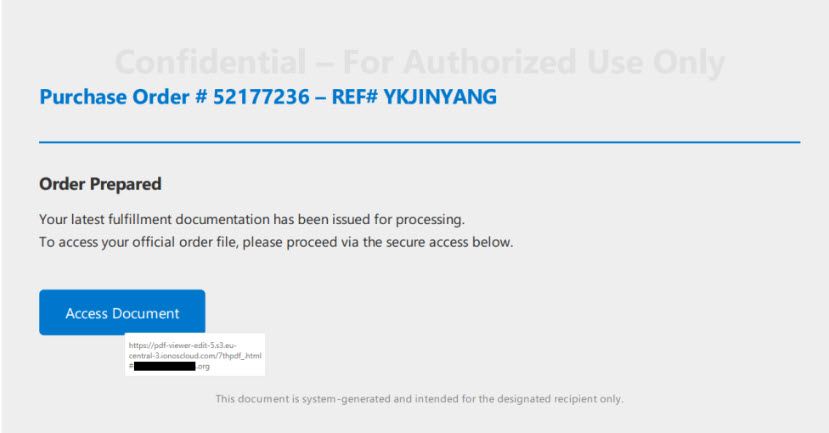
The visible content of the PDF showed a button prompting the recipient to view the purchase order. Hovering over the button revealed a long URL that included a reference to a PDF viewer. While this might fool some people at first glance, a closer look raised red flags.
The most likely objective was to harvest business email addresses and their passwords. Attackers commonly test these credentials against enterprise services such as Microsoft Outlook, Google Workspace, VPNs, file-sharing platforms, and payroll systems. The deliberately vague prompt for a “business email” increases the likelihood that users will provide corporate credentials rather than personal ones.
There was also a small personalization touch. The “Estimado” greeting sets a professional tone and is common in business correspondence across Spanish-speaking regions.
The most likely objective was to harvest business email addresses and their passwords. Attackers commonly test these credentials against enterprise services such as Microsoft Outlook, Google Workspace, VPNs, file-sharing platforms, and payroll systems. The deliberately vague prompt for a “business email” increases the likelihood that users will provide corporate credentials rather than personal ones.
There was also a small personalization touch. The “Estimado” greeting sets a professional tone and is common in business correspondence across Spanish-speaking regions.
Continue to the full analysis in the original article here.
Key Takeaway: Make sure you have a fraud response plan in place if your company uses 3rd party providers that house your vendor sensitive data in case that provider is compromised.
Enroll in Training Sessions: Last Thursday of Every Month is Training on Frauds and New Scam Alerts and How to Combat
Enroll in Training Sessions: Last Thursday of Every Month is Training on Frauds and New Scam Alerts and How to Combat